


The best air purifier in India 2026 will frequently result in familiar brand names, very flashy screens and quite large room coverage claims. But India’s air problem is no longer confined to a couple of bad weeks in Delhi anymore. Road dust, construction, traffic, smoke and indoor cooking fumes will force pollution right into homes all over metros, tier-2 cities and smaller towns. Making the right choice really depends on one key figure—CADR.
Indian consumers’ biggest mistake is choosing by brand name rather than comparing CADR with the size of the room. Although a purifier could have an excellent filter and clean superbly, it may still not be fast enough for your needs.
We compared nine popular models based on room size calculations, filtration efficiency, sensor utility, noise level, power consumption, service accessibility and the recurring cost of replacement filters. Some will be more suitable for living rooms, while others can better placed beside a bed, on a desk or even inside a car. That difference really matters.
Best Air Purifier in India 2026: At a Glance
- Best overall for long-term value: Coway Airmega 150
- Best for a bedside table or desk: LEVOIT Core Mini
- Best for medium-sized living rooms: Honeywell Air Touch V3
- Best compact bridge purifier: Coway Airmega AIM
- Best for homes with pets: LEVOIT Core 300
- Best smart purifier with numerical PM2.5 data: Xiaomi Smart Air Purifier 4 Lite
- Best for large rooms and quiet operation: Philips AC2220
- Best for monsoon allergens and VOC control: Honeywell Air Touch V2
- Best for car cabins: Reffair AX30 MAX
Comparison Table
| Product | CADR | Ideal Room Size | Filter Type | Estimated Annual Filter Cost |
| Coway Airmega 150 | 303 m³/h | 300–355 sq ft | Pre-filter + urethane carbon + True HEPA | Low |
| LEVOIT Core Mini | ~78 m³/h | 50–80 sq ft | Nylon pre-filter + particle filter + activated carbon | Medium |
| Honeywell Air Touch V3 | 300 m³/h | 300–450 sq ft | Pre-filter + H13 HEPA + activated carbon | Medium–High |
| Coway Airmega AIM | Up to 303 m³/h* | 200–355 sq ft | Pre-filter + deodorisation carbon + Green True HEPA | Medium |
| LEVOIT Core 300 | 240 m³/h | 200–360 sq ft | Nylon pre-filter + particle filter + activated carbon | Medium |
| Xiaomi 4 Lite | 360 m³/h | 270–460 sq ft | Primary filter + high-efficiency particle filter + activated carbon | Medium |
| Philips AC2220 | 420 m³/h | 350–630 sq ft | Pre-filter + NanoProtect HEPA + activated carbon | Medium–High |
| Honeywell Air Touch V2 | 250 m³/h | 250–375 sq ft | Pre-filter + H13 HEPA + nano-silver + activated carbon | Medium |
| Reffair AX30 MAX | 16.2 m³/h | Car/personal zone | H13 HEPA + optional plasma-ion function | Medium |
*Indian listings and international documentation show different AIM figures; verify the exact unit label.
Cost bands are relative, not fixed rupee quotations. Low generally means a long replacement interval. Medium means roughly one normally priced filter per year. High means frequent replacement or an expensive proprietary cartridge. Severe pollution can move any model into a higher band.
Related: How Can I Purify Air Naturally at Home in India, Can We Open Windows with an Air Purifier Running?
How We Evaluated the Best Air Purifier
We compared the clean-air delivery rate, the real room size, the filter’s construction, the power consumption, the noise level, the sensor’s quality, the warranty, the access to replacement filters and their availability both online and offline. We didn’t rank the products based on their price or the recognition of their brand.
Our quick preselection formula is:
Room size in sq ft = CADR in m³/h × 1.5
For example, a 300 m³/h purifier maps to roughly 450 sq ft under this rule. Treat that as an upper screening limit, not a promise. During severe smog, with doors opening often or with a high ceiling, sizing one class higher is sensible.
We also thought about long-term property ownership. A cheap purifier requiring two expensive filters each year may end up costing more over three years than a rather more expensive unit having an 8,500-hour filter. The price, life and availability of the filters matter just as much as the device.
Best Air Purifiers: Our Top 9 Picks
1. Coway Airmega 150 (AP-1019C)

Specs: CADR: 303 m³/h | Ideal room size: 300–355 sq ft | Filter: Washable pre-filter + patented urethane activated-carbon filter + Anti-Flu True HEPA filter | Noise: approximately 22–49 dB | Filter life: up to 8,500 hours | Air-quality sensor: Colour-coded pollution indicator | Operating modes: Auto + three manual fan speeds | Filter indicator: Yes | Warranty: Up to seven years on the motor after registration
The Airmega 150 really gets the ownership cost equation right. Its main feature is an advertised 8,500-hour life span for both its HEPA and carbon filters. When used for eight to twelve hours every day, that translates into roughly 1.5 – 2 years, all dependent on the amount of pollution present and the fan’s speed.
A basic air purifier with a six-month filter would require 3 to 4 replacements over the same time frame. That difference will eliminate any savings from a cheaper initial purchase price.
Its 303 cubic meters per hour CADR is just right for a typical Indian master bedroom or compact sitting room. Our calculation gives a theoretical maximum area of around 455 square feet, but 300-355 square feet is a much more comfortable target if there’s very high pollution outdoors. The very slim profile lets it sit close to a wall without taking up an excessive amount of floor space.
Filtration is quite straightforward—a washable pre-filter catches hair and large dust particles, the urethane-activated carbon filter will deal with some smells and gases and the true HEPA layer captures the finer particles. Auto mode adjusts according to detected pollution levels and can then lower energy consumption once the air has cleared.
A long filter life is only valuable if replacement filters are always going to be available. Coway does have a well-established sales channel in India. To daily users, this will prove to be an economic rather than just being a very effective air cleaner.
Pros
- Strong 303 m³/h CADR
- 8,500-hour filter claim
- Low long-term filter burden
- Washable front pre-filter
- Quiet low-speed operation
Cons
- Not meant for large open halls
- Carbon depth is not industrial-grade
- Maximum speed is audible
- No app or remote control
2. LEVOIT Core Mini Air Purifier

Specs: CADR: approximately 78 m³/h | Ideal room size: 50–80 sq ft | Filter: Nylon pre-filter + HEPA-grade particle filter + activated-carbon filter | Noise: approximately 25–44 dB | Filter life: approximately four to six months | Air-quality sensor: No | Automatic mode: No | Fan speeds: Three | Filter indicator: Yes | Aromatherapy pad: Yes | Warranty: Two-year limited warranty, subject to Indian seller terms
Let’s do the math before the marketing really takes hold. A CADR of about 78 cubic meters per hour multiplied by 1.5 equals 117 square feet. That’s still being quite generous if you’re looking for very fast cleaning.
At a more practically useful rate of four or five air changes per hour, the Core Mini really belongs in a very small personal space—say, beside a bed, on a desk, in a study cubicle or close to a cot. It’s not going to be a complete-bedroom purifier for the usual 120 to 180 square foot Indian room.
That limitation is quite appealing. The unit is incredibly compact, consumes just about 7 watts, and will run ever so quietly during the nighttime hours. Its cylindrical filter takes in air all around the body rather than through a narrow front grille. The nylon pre-filter traps bigger debris particles while the particle filter deals with finer dust and allergens. The activated-carbon layer targets lighter odors. However, the relatively small carbon layer won’t hold down strong kitchen fumes for too long.
An unusual additional feature is an aromatherapy pad. Adding just a few drops of the appropriate fragrance oil gives the air a pleasant scent without putting oil straight onto the filter. People sensitive to fragrances, asthma triggers or VOCs might want to leave it unused; “pleasant” doesn’t automatically mean cleaner.
Filter life is generally around four to six months, so that low purchase price doesn’t reveal the whole cost story. If used in the right place, it makes for a neat little personal air purifier. Asked to clean an entire bedroom, it will simply move too little air.
Pros
- Tiny bedside-friendly footprint
- Very low power draw
- Quiet at low speed
- 360-degree air intake
- Built-in aroma pad
- Simple one-button control
Cons
- Very low 78 m³/h CADR
- Small carbon layer
- Four-to-six-month filter cycle
Related: How Often to Change Air Purifier Filters in India, How Many Hours to Run an Air Purifier Daily in India? 24/7 vs. Eco Mode, Do Air Purifiers Remove Smells in India?
3. Honeywell Air Touch V3 3-in-1 Air Purifier

Specs: CADR: 300 m³/h | Ideal room size: 300–450 sq ft | Filter: Washable pre-filter + H13 HEPA filter + activated-carbon filter | Noise: approximately 30–52 dB | Filter life: up to one year, depending on usage and pollution | Air-quality display: Real-time PM2.5 indicator | Airflow: Front and upward 3D airflow | Operating modes: Sleep + Auto + manual fan speeds + Turbo | Timer: Yes | Child lock: Yes | Filter indicator: Yes | Warranty: One to two years, depending on seller and model batch
Honeywell has variously named AirTouch units up for sale, so you really need to know the model number. The Air Touch V3 is the relevant high-output 3-in-1 option: a washable pre-filter, an H13 HEPA layer and an activated-carbon filter all paired with a 300 m³/h CADR.
Don’t confuse it with the smaller V1 model, which has a rating of about 152 m³/h and isn’t a large room machine.
At 300 m³/h our room formula suggests an area of around 450 square feet. That makes the V3 a sensible choice for medium-sized living rooms. Especially when the purifier will have to recover quickly after a balcony door is opened.
Its 3D airflow sends out the cleaned air both forward and upwards. This matters much more than you might think. A single-direction outlet will create a clean area right next to the machine while the air remains quite slow-moving behind a sofa, dining table or curtains. Wider circulation really does help eliminate those “dead zones” where dust settles most of the time.
The pre-filter deals with coarser dust and hair; the H13 HEPA filter captures the finer particulate matter; and the activated-carbon filter targets smoke and everyday smells. Having a real-time PM2.5 display is way more useful than having a single colour light, although a consumer sensor should be seen as an indicator of trends rather than a proper lab monitor.
Maximum speed is very evident, and the 65W draw is higher than that of some competitors.
Pros
- High 300 m³/h CADR
- Genuine H13 HEPA stage
- Useful 3D airflow pattern
- Real-time PM2.5 display
Cons
- Turbo speed is clearly audible
- Higher 65W maximum draw
- Bulky for a bedside table
Related:
- Best Robot Vacuum Cleaners in India
- Best Stabilizers for AC in India
- Best Treadmills for Home in India
- Best Cordless Vacuum Cleaners in India: All Budgets
- Best Car Vacuum Cleaners in India
4. Coway Airmega AIM (AP-0623B)

Specs: CADR: Up to 303 m³/h on Indian listings | Ideal room size: 200–355 sq ft | Filter: Pre-filter + deodorisation activated-carbon filter + Green True HEPA filter | Noise: approximately 22–55 dB, depending on listing | Filter life: up to 8,500 hours | Air intake: 360 degrees | Horizontal oscillation: Up to 80 degrees | Vertical tilt: Up to 90 degrees | Air-quality sensor: Colour-coded indicator | Controls: Touch controls + remote control | Filter indicator: Yes | Warranty: Seven years on the motor and one year on electrical parts, subject to registration terms
The Airmega AIM is a connection between a small personal purifier and a traditional floor-standing model. Its compact body really works well in tightly fitted urban apartments where a big purifier would really obstruct a path or compete with your nightstand.
And yet it still retains Coway’s multi-layered particle and odor filtration system—instead of just counting on a token desktop filter. Its turning, fan-like head is the most recognizable feature. Rather than blowing all clean air directly upwards, it will direct airflow towards a bed, workspace or sitting area. That specifically directed flow can help mix things better in a small room and present cleaned air right where someone is really sitting.
The intake surrounds almost all of the casing, so it’s much less reliant on one single front-facing opening. The pre-filter catches bigger debris, the deodorization carbon layer handles those light smells, and the Green True HEPA filter really captures very fine dust and airborne particles.
There is an important specification note. Indian listings are frequently seen advertising up to 303 cubic meters per hour and 355 square feet, whereas international AIM documentation records considerably lower smoke, dust and pollen CADR values. These could be different market variants or even follow different testing methods. Do make sure you verify the rating actually printed on the specific AP-0623B box rather than assuming that each AIM is identical.
If used a bit more cautiously, it’s suitable for a bedroom, study, or very compact 1-bedroom flat zone. It isn’t our number one option for a quite big open-plan hall. Floor space efficiency is really the major advantage here: providing robust filtration in a form that will really fit on a narrow console, shelf or a small section of floor.
Pros
- Compact urban-apartment footprint
- Directional oscillating airflow
- Multi-stage Coway filtration
- Remote control included
Cons
- Conflicting regional CADR figures
- Less suitable for large halls
- Maximum speed can be loud
5. LEVOIT Core 300 Air Purifier for Allergies and Pet Hair

Specs: CADR: 240 m³/h | Ideal room size: 200–360 sq ft | Filter: Nylon pre-filter + HEPA-grade particle filter + activated-carbon filter | Noise: approximately 24–50 dB | Filter life: approximately six to eight months | Air intake: 360 degrees | Air-quality sensor: No | Automatic mode: No | Operating modes: Sleep + three manual fan speeds | Timer: Yes | Display-off function: Yes | Filter indicator: Yes | Warranty: Two-year limited warranty, subject to Indian seller terms
The listing phrase “for allergies and pet hair” commonly points to the LEVOIT Core 300. Its cylindrical shape isn’t merely a design choice.
A 360-degree intake draws in air from all sides near the floor, where heavier pet hair, skin flakes and dander really tend to collect. A flat-front purifier will miss debris approaching from the rear unless it sits rather far from the wall. A cylinder has a much greater capture perimeter and is less sensitive to orientation.
However, physics does have its limits. Purifiers essentially capture airborne materials; they don’t substitute for floor cleaning or upholstery vacuuming. Long pet hair may collect on the outer nylon pre-filter – which is precisely where it should stop before clogging the finer layer. Cleaning that surface regularly really helps preserve airflow.
The 240 m³/h CADR provides a formula ceiling of 360 sq ft, but around 200-250 sq ft is a safer bedroom target when facing severe pollution. Sleep mode is very quiet, while the maximum speed is still clearly audible yet useful after sweeping, grooming or even opening a door.
The inner particle filter captures very fine dust, pollen and airborne dander. The activated carbon layer will help decrease pet odors—although its thin form really does have less gas-holding capacity compared to a deeper pellet bed. LEVOIT’s availability in India has improved. The most trusted one on Amazon.
Pros
- Effective 360-degree intake
- Strong 240 m³/h CADR
- Good for bedrooms with pets
- Quiet 24 dB sleep claim
- Ozone-free mechanical filtration
- Compact circular footprint
Cons
- Not a substitute for vacuuming
- Carbon layer is relatively thin
- No sensor on the non-smart Core 300
- No app on this version
- Turbo mode reaches approximately 50 dB
Related: Best Portable Air Coolers in India: Our Top Picks, Best 750 Watt Mixer Grinders in India: Top Picks for Better Kitchen
6. Xiaomi Smart Air Purifier 4 Lite

Specs: CADR: Up to 360 m³/h | Ideal room size: 270–460 sq ft | Filter: Primary pre-filter + Xiaomi high-efficiency particle filter + activated-carbon filter | Noise: 33.4–61 dB | Filter life: approximately six to twelve months | Air intake: 360 degrees | Air-quality sensor: High-precision laser PM2.5 sensor | Display: Numerical PM2.5 + temperature + humidity + colour indicator | Smart controls: Xiaomi Home app + Google Assistant + Amazon Alexa | Operating modes: Auto + Sleep + manual settings | Filter-life tracking: Yes, through the display and app | Warranty: One year
The Xiaomi 4 Lite really shows its strength when you need actual evidence—not just reassurance. The high-precision laser particle sensor feeds an exact PM2.5 number right onto the front display and also into the Xiaomi Home app.
Basic purifiers simply show a green, orange or red ring. That’ll tell you if the air is improving but won’t let you know if PM2.5 has dropped from 180 to 70 or from 35 to 20. Having numerical data does remove a great deal of that guesswork.
The sensor also makes auto mode much clearer. You’ll see when frying causes particles how fast your room recovers once a door opens and whether a low fan speed will be enough overnight.
Consumer sensors can drift due to dust or humidity, so the reading should really be looked at for trends, not for medical-grade measurement. Regularly cleaning round the sensor inlet does help, though.
With a particle CADR of up to 360 m³/h, the formula would suggest 540 square feet. Xiaomi’s own effective coverage is actually a bit lower. Around 269-463 square feet, which is probably the more realistic estimate. It’ll cope with a large bedroom or a medium-sized living room provided doors and windows are mostly closed.
Its main filter catches hair and bigger dust particles, while the high-efficiency inner material deals with finer particles and the activated-carbon layer really helps cut down on everyday smells and selected VOCs.
Xiaomi describes a high-efficiency filter with 99.97 percent particle filtration, but it’s not always marketed as an independently certified H13 HEPA in every region.
If you want all the features, it’s one of the top options.
Pros
- High 360 m³/h CADR
- Numerical PM2.5 display
- High-precision laser sensor
- App control and scheduling and smart features
Cons
- Maximum 61 dB is loud
- App requires Wi-Fi setup
- Sensor needs occasional cleaning
- Carbon capacity is limited
7. Philips Air Purifier AC2220

Specs: CADR: 420 m³/h | Ideal room size: 350–630 sq ft | Filter: Washable pre-filter + NanoProtect HEPA filter + activated-carbon filter | Noise: approximately 13 dB in sleep mode to around 50 dB | Filter life: up to three years under specified usage conditions | Air intake: 360 degrees | Air-quality sensor: AeraSense PM2.5 sensor | Display: Numerical PM2.5 + colour-coded air-quality indicator | Smart controls: Philips Air+ app | Operating modes: Auto + Sleep + manual fan speeds + Turbo | Filter-life tracking: Yes | Display dimming: Yes | Warranty: Two years
The AC2220 combines a high airflow with one of the better sensor-and-service combinations in our list. Its 420 m³/h CADR provides a screening figure of 630 sq ft, although 350-500 sq ft is a more realistic real-world target.
That will be enough for a master bedroom or a spacious living room or home office where doors are often open.
Philips’ AeraSense system continuously monitors airborne particles and adjusts fan speed. The value isn’t just in the display. A very responsive sensor stops the machine from idling during a cooking peak or from running at full power for a long time after the air has cleared.
Like any consumer particle sensor, it’s really best for seeing changes over time—rather than replacing a carefully calibrated monitor.
Noise is yet another strength. Philips says it has very low sleep mode sound levels, making the AC2220 much easier to live with in a bedroom even though it has an extremely high maximum airflow.
Its three-layer system consists of a washable pre-filter for big dust and hair, a NanoProtect HEPA filter for finer particles, and an activated carbon filter for certain gases and smells.
Philips also has a wider offline retail and service presence in India than many online-first purifier brands. This makes repairs, support and finding the right filters feel less daunting. Nevertheless, the arrangements for servicing appliances will vary per city and per type of product.
Long-claimed lifetimes for filters are certainly attractive, but Delhi smog, dust from building works, and continuous use will all very significantly shorten them.
Pros
- Powerful 420 m³/h CADR
- AeraSense particle monitoring
- Numerical air-quality feedback
- App-enabled smart control
Cons
- Expensive
- Genuine filter can be expensive
8. Honeywell Air Touch V2 — Four-Stage Filtration
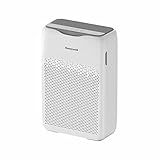
Specs: CADR: 250 m³/h | Ideal room size: 250–375 sq ft | Filter: Washable pre-filter + H13 HEPA filter + nano-silver antibacterial layer + activated-carbon filter | Noise: approximately 32.5 dB on low | Filter life: up to 9,000 hours or one year | Airflow: Front and upward 3D airflow | Air-quality monitoring: Real-time PM2.5 indicator | Operating modes: Auto + Sleep + manual fan speeds + Turbo | Filter indicator: Yes | Timer: Yes | Warranty: Up to two years, depending on seller and model batch
The Air Touch V2 is frequently described as a four-stage purifier, but that fourth stage isn’t magic. The chain consists of a washable pre-filter for coarse dust, an H13 HEPA for finer particles, an antibacterial nano-silver layer, and an activated carbon for odors and VOCs.
The silver treatment aims to prevent microbes caught within the filter from growing, while carbon absorbs some of those gaseous pollutants. Neither transforms the purifier into a sterilizer, and neither substitutes moisture control.
That distinction matters particularly during India’s monsoon season. Very high humidity encourages mold growth on damp walls, inside wardrobes, and round AC coils. HEPA can capture airborne mold spores, and the antibacterial layer might just help manage microbial activity right on the filter surface. Carbon reduces those characteristic musty smells and certain VOCs.
A 250 m³/h CADR maps to roughly 375 sq ft when we use our formula—a bit closer to the claimed 388 sq ft. In a polluted city, consider it a 200-300 sq ft bedroom or small living room purifier if you want faster cleaning times.
Its three-dimensional front and upward airflow really improve circulation without requiring it to be placed centrally. Filter life is said to be as high as 9,000 hours—roughly one year. Although very heavy dust will sharply reduce that figure.
Pros
- Clear four-stage filter stack
- H13 HEPA particle filtration
- Carbon targets VOCs and odours
- Antibacterial filter treatment
- Useful PM2.5 display
Cons
- Carbon capacity is finite
- Silver layer is not room sterilisation
9. Reffair AX30 [MAX] Air Purifier for Car & Home

Specs: CADR: 16.2 m³/h | Ideal space: Car cabin or immediate personal zone | Filter: H13 HEPA filter with an optional smart plasma-ion function | Noise: approximately 35 dB | Power: USB-C with no built-in battery | Filter life: up to nine months | Air-quality sensor: No | Automatic on/off: Yes | Aromatherapy option: Yes | Filter indicator: No | App support: No | Warranty: One-year limited warranty
The AX30 MAX is a car purifier first and a compact personal purifier secondly. Its 16.2 m³/h CADR is much lower than that of even the LEVOIT Core Mini, so “home” really has to be a desk, bedside breathing space, or a very small enclosure—not a room.
Within the car cabin, however, the volume is small enough for that airflow to really matter, particularly with all windows closed and the air conditioning set to recirculate.
Its most important safety decision is the absence of an integrated rechargeable battery. A parked car on an Indian summer’s day will get extremely hot. Taking out the lithium battery eliminates the particular risk of battery swelling or thermal runaway while the purifier stays inside.
It doesn’t eliminate all possible fire risks either. The cable, adapter and vehicle socket must remain undamaged and properly rated. That is a more realistic statement than saying any powered device is “100 per cent risk-free.”
The H13 HEPA filter gives you actual physical particle capture rather than counting solely on ions. The intelligent plasma-ion feature might be optional depending on the model; sensitive individuals might want to have it switched off and rely instead on the H13 filter.
USB-C power and automatic on/off are pretty convenient when combined with the car’s ignition. The tapering cup holder shape is quite practical, but the small filter will clog fast in dusty conditions. Be prepared to inspect it more frequently than with a bedroom purifier.
Designed for cars, it makes sense. For rooms though, the CADR mathematics says no.
Pros
- No built-in lithium battery
- H13 HEPA mechanical filtration
- USB-C power connection
- Automatic on/off convenience
- Low 1.5W power draw
Cons
- Tiny 16.2 m³/h CADR
- Not suitable for rooms
- Ion feature may not suit everyone
Why Air Purifiers Matter in India 2026
Indian homes are faced with a very messy combination of pollutants. PM10 comprises bigger dust particles from roads and building sites. PM2.5 is smaller, penetrates even more deeply into the lungs, and rises very sharply during smoke events. VOCs originate from paint, cleaners, furniture, incense and cooking.
Winter further worsens things across northern India. A temperature inversion holds the dirty air close to ground level, while very low winds prevent it from dispersing. Diwali fireworks will add an extra heavy pollution load over and above that caused by traffic, crop burning and the seasonal smog. In cities, construction dust and vehicle exhaust dominate your daily exposure. Rural homes might be exposed to biomass smoke, crop-residue burning and extremely dusty roads.
And then there is that indoor layer: frying, tadka, masala smoke and aerosolized oil. A closed kitchen creates a brief but extremely intense particle peak. A purifier won’t replace proper ventilation or an exhaust hood but using the right size HEPA and carbon filtration will reduce what remains suspended indoors.
How to Choose the Right Air Purifier for Your Space
Start out with the room size—then move backward to CADR. Measure the length times width in feet. Using the quick rule, divide the room area by 1.5 to get an idea of the minimum CADR in cubic meters per hour. A 300 square foot room will need around 200 cubic meters per hour on paper.
In Delhi’s winter, near construction sites or when doors are opening all the time, you’ll want to add a 25-50 percent buffer. High ceilings will also increase the volume of air that has to be cleaned.
Now take a look at the filter wording. “HEPA-type,” “HEPA-like” and “99 percent filtration” are marketing phrases, not actual filter grades. For Indian dust and PM2.5, a properly documented True HEPA or H13 HEPA filter is your safer bet.
H13 is put through a well-defined efficiency test standard; vague “type” media might not be. There is one trade-off: more dense filters need a fan that has been very carefully designed. A very high filter grade without having enough CADR really will only produce slow cleaning results.
Activated carbon is important if you’re concerned about smoke, paint fumes, and cooking smells. A thin carbon sheet is good for light smells; a heavier carbon bed will last longer against VOCs. HEPA doesn’t remove gases.
Lastly, have a look at both sleep noises. Under 35 decibels is a reasonable target for a bedroom.
Room-by-Room Buying Guide
1. Bedrooms
A bedroom air purifier will need sufficient airflow to actually clean out the room right before you go to sleep and then stay silent all through the night. Be on the lookout for a low setting that’s under 35 dB, a dimmable display, and a CADR with at least 25% headroom.
Put it away from curtains and furniture, best with 20-30 cm of intake clearance. A high-CADR model running very slowly may be quieter than a smaller air purifier working hard at maximum speed.
2. Living rooms
Living rooms are a bit trickier because doors are open, people move about, and there are air leaks into corridors or dining areas. Select a slightly larger CADR than just the floor area indicates.
Wide or vertical airflow really helps mix the clean air right round sofas and corners rather than making a ‘clean bubble’ beside the machine. In an open plan setting, figure out the whole connected space – not just the seating area.
3. Kitchens
An air purifier should be secondary to a chimney or extraction fan. Frying and making spice mixes produce particles while oil, LPG combustion, and spices give off odors and gases too.
Pick a unit that’s got quite a bit of activated carbon—not just HEPA. Have it several feet away from the hob so that grease doesn’t coat the filter. Carry out ventilation while cooking. Then use the purifier to get rid of any remaining particles. Never think of an air purifier as your sole protection against carbon monoxide or a gas leak.
Maintenance and Filters Guide
- Filter life claims are determined under carefully set assumptions. In very polluted Indian cities, real life might actually be 30-40 percent shorter since construction dust, winter smog, incense, pet hair and cooking aerosols will load the medium faster.
- The display will still show ‘good’ even if airflow has decreased. So keep an eye on cleaning speed, fan strain, and visually apparent dust as well as the replacement indicator.
- It’s a good idea to develop the habit of vacuuming the pre-filter every two weeks using a soft-bristled brush attachment. Don’t wash a HEPA filter unless your manual specifically tells you that it’s safe to do so. Water could damage its fibers and seals. A washable mesh pre-filter has to be completely dry before you reinstall it.
- Check the sensor inlet every month and clean the outer grilles. If odors come back all too quickly, then the carbon might be saturated even though the HEPA layer still has life left in it.
- During the monsoon season, check for dampness or mildew around the machine. A purifier should sit in a dry spot with good airflow – never right against a wet wall.
Conclusion
Best air purifier choices should not really be determined by a logo, colored light or overly large coverage claim. Clean indoor air results from matching clean-air delivery to the room – utilizing verified particle filtration, providing sufficient carbon for the odor load and keeping the system maintained before airflow fails.
India’s pollution pattern makes that sizing all the more important. Winter inversions, road and construction dust, smoke events, very humid monsoons, and high-emission cooking will all challenge the same filter in different ways. An air purifier forms just one layer of control. It is not a substitute for exhaust ventilation, source removal, or sensible cleaning. In the end the right machine will move enough air, remain quiet enough to operate and stay quite affordable to maintain.
Frequently Asked Questions (FAQs)
Yes, a properly sized purifier equipped with a verified HEPA filter can decrease airborne PM2.5, dust, pollen and smoke. It only works when air flows through the filter – so CADR, placement, closed windows and running time determine the outcome.
An air purifier draws room air through filters and then gives back cleaner air. HEPA catches the particles, while activated carbon adsorbs certain smells and gases. It doesn’t manufacture oxygen, take away settled dirt or substitute ventilation.
Neither replaces the other. An AC will regulate your temperature and humidity, while an air purifier will eliminate airborne particles. Many split-AC filters really can’t catch very fine PM2.5 very effectively. So homes with high levels of pollution might need both units.
They could be worthwhile in heavily polluted areas, near highways or building sites, and for homes seriously affected by smoke, pollen or your pet’s dander. Your investment’s value really will depend upon getting the right CADR and having affordable replacement filters. Not just the machine.
The major downsides are filter costs, fan sound, power usage and also limited removal of gases. Units that are too small clean slowly, and filters that are left uncleaned will see their airflow reduced, and ionizing types may not be suitable if they do produce ozone.
Yes, air purifiers are made for each and every day’s use. Continuous low-speed running often preserves cleaner air rather than repeatedly cleaning a very polluted room. Just be sure to keep the vents open and change filters right on time.


